INDUSTRY:
WELLNESS
YEAR:
2025
TIMELINE:
3.5 MONTHS
EXPERIENCE:
PRODUCT, GAME DESIGN
overview.
For my major studio class, I learned about design iteration and prototyping. Through my projects, I explored mindfulness in design. I conducted creative research studies, wrote and executed survey studies, analyzed the resulting data, and created prototypes of my products.
The results of the design process and prototyping is my final project: a mindfulness game. Linked below is my process blog for the class.
challenge.
I noticed that apps/websites for mental health were easily forgotten, making mindfulness hard to turn into habit. I wanted to explore ways to make mindfulness resources more useful and easily incorporated into life
Research Questions
How can physical and/or virtual spaces be designed to promote connection and improve wellness and bring forth positive emotions from users without becoming addicting/damaging to psyche?
How can the engaging concepts of immersive and narrative exhibits be taken out of museums/galleries/websites and be incorporated in everyday life?
How can I go beyond meditation and existing mental health apps to make mindfulness more engaging?
conceptualization.
User Research
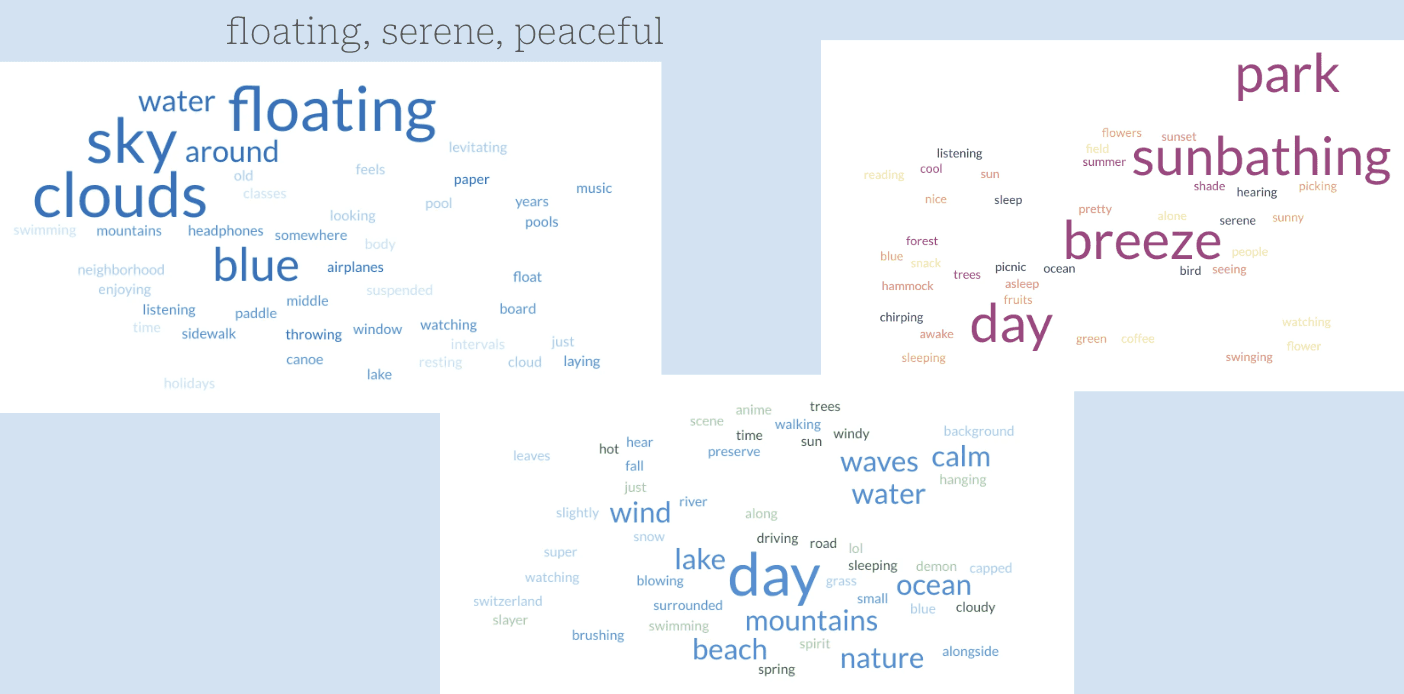
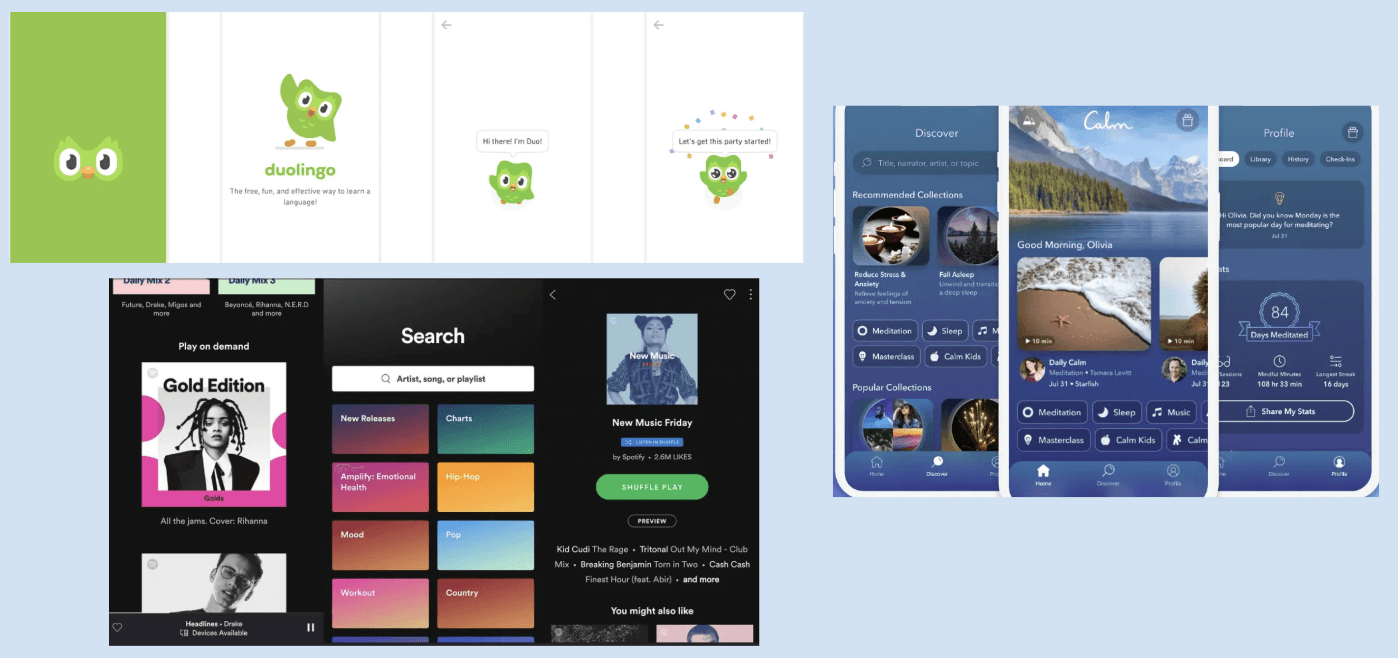
I created and conducted a survey to see what qualities and environments people associated with peace, calm, and mindfulness. I also surveyed people on their reaction to the user interface of various apps.
Random Prompts
For my first survey, I used a random prompt format and asked people to stream-of-conscious write about things they associated with words like floating, serene, peaceful. I gathered the results and created word clouds to find the most common associations.
Picture Cards
For my second survey, I used picture cards of various apps’ user interfaces and asked people how they felt upon seeing the design.
Concept 1: Storyboards for a digital / virtual app
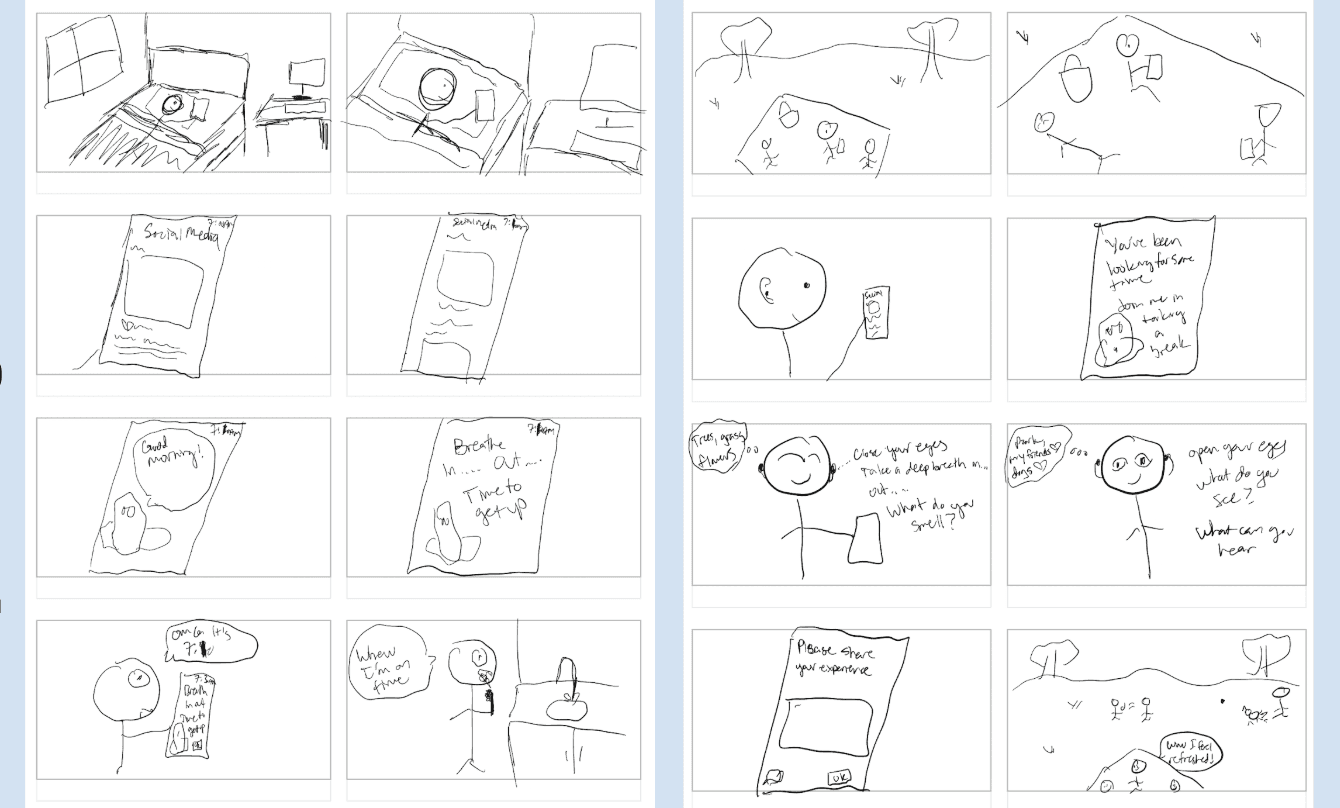
I created storyboards to illustrate my concept of a wellness app that reminds users to do mindfulness exercises and lets users know if they spend too long on their phone.
Concept 2: Physical book prototype
Considering the timeline of my final project, a working digital app was not feasible. I thought of turning the app into a book prototype. The concept behind the book was to be an easily portable mindfulness pocket guide. Inside, the book would have mindfulness prompts, motivational prompts/quotes, fidget and sensory toys, etc.

prototyping.
Prototype 1: Mindfulness Card Game
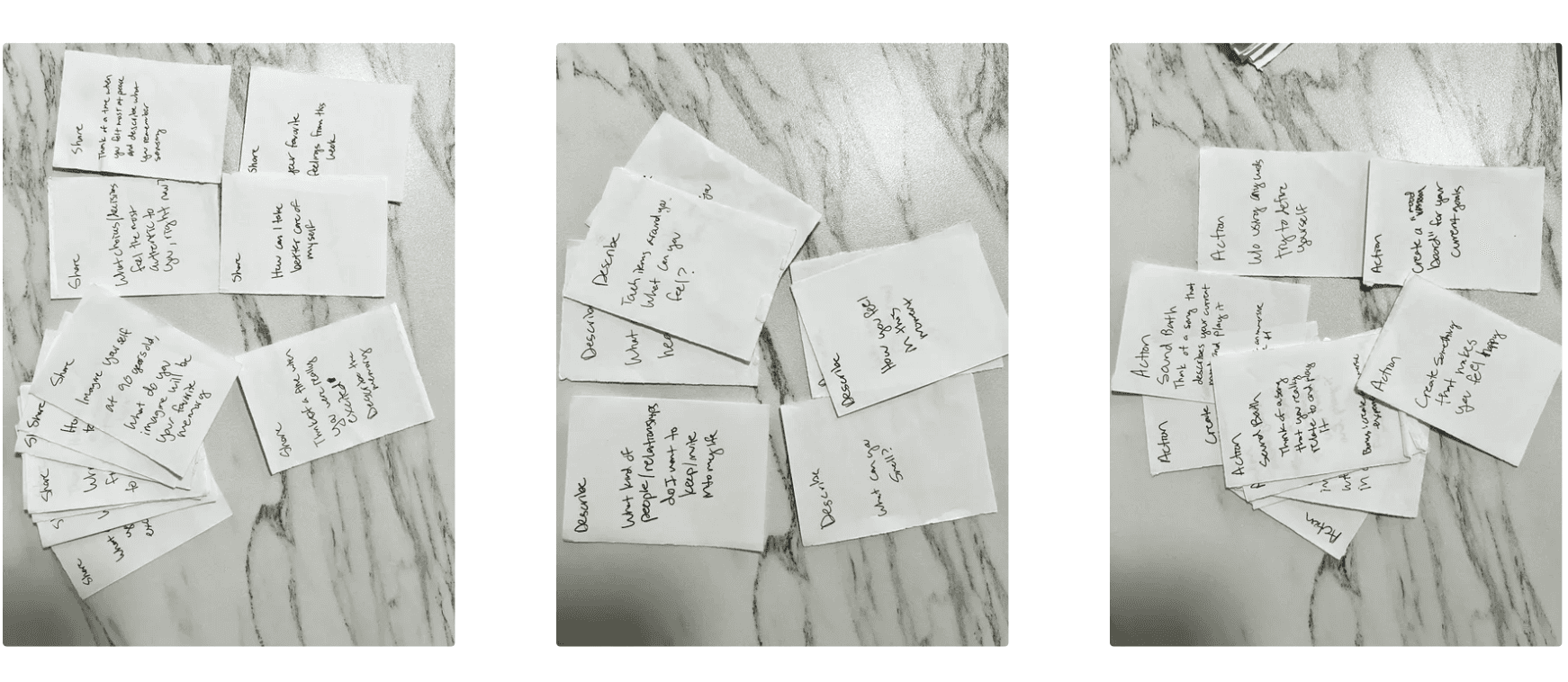
My next prototype was a mindfulness card game. I made three types of cards: share, describe, and action. The share cards included reflective prompts about the past and realigning prompts about the future, the describe cards include recentering prompts about the present, and the action cards are prompts for creating immersive/interactive representations of the player’s answer.
Prototype 2: Low Fidelity Mindfulness Board Game
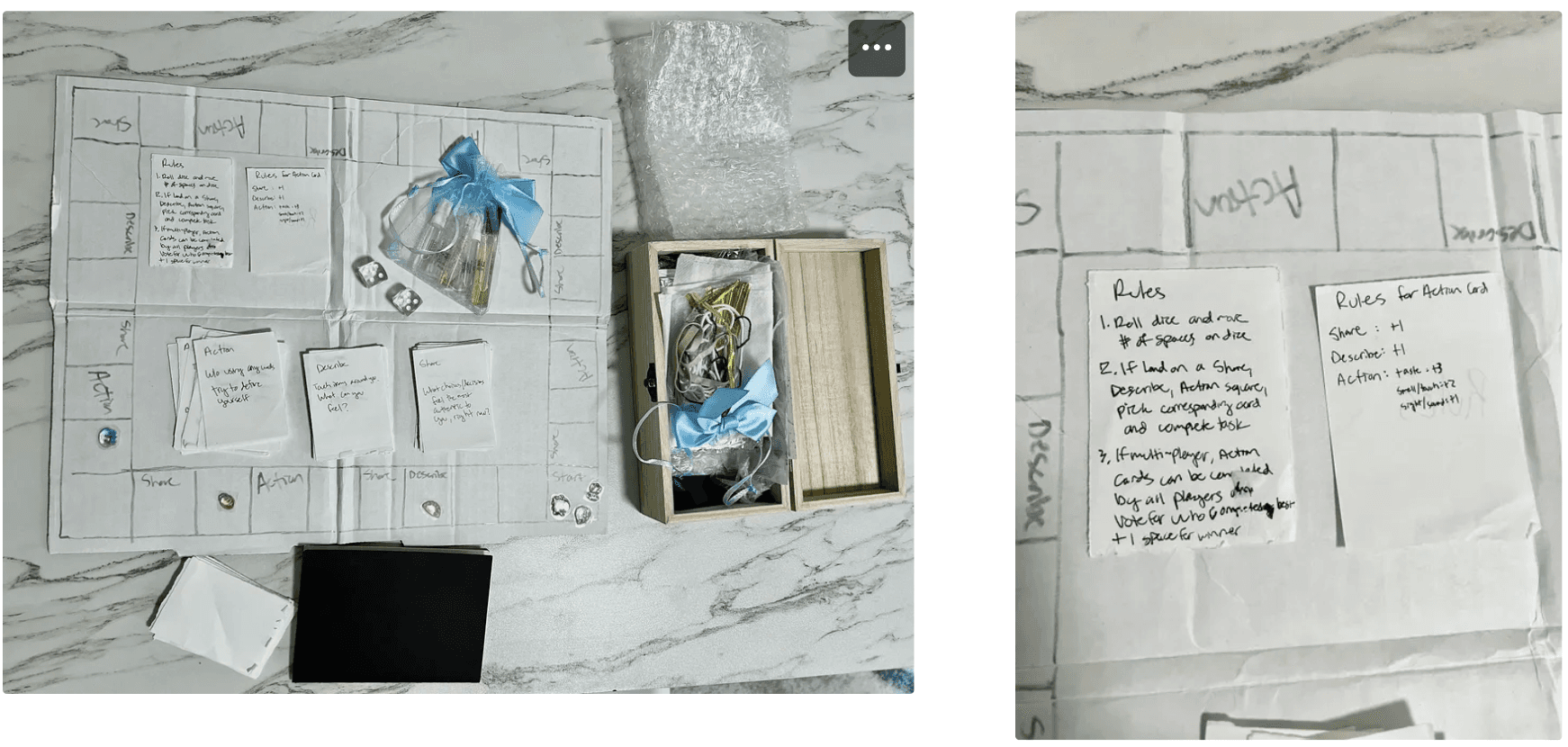
After making the cards, I felt that they were too similar to existing journal prompt cards / getting to know you card games. I wanted to add onto the cards in a way that would make them more game-like and engaging, which led to me to the fourth prototype: a board game.
user testing.
I conducted user testing for my fourth prototype, the board game, during a cohort-wide testing session. I received a lot of helpful feedback on the game. People thought making a fun mindfulness game would make reflecting and journaling more fun. They thought my idea of adding dreamy, calming, and soothing visuals would make the game very aesthetic.
I received a lot of helpful tips on how to make the game more engaging. People suggested branching paths instead of a one way journey could be fun by adding a bit of a strategy component. They also debated on how to make the game more competitive to be more engaging but also not too competitive since that may hurt players’ psychological states (ie people fighting when losing in monopoly). Some ways to make the game more competitive included collecting cards to win, keeping track of score to win, and adding more competitive action cards (ie steal card: steal card from another player by completing the prompt on the card).
final product.
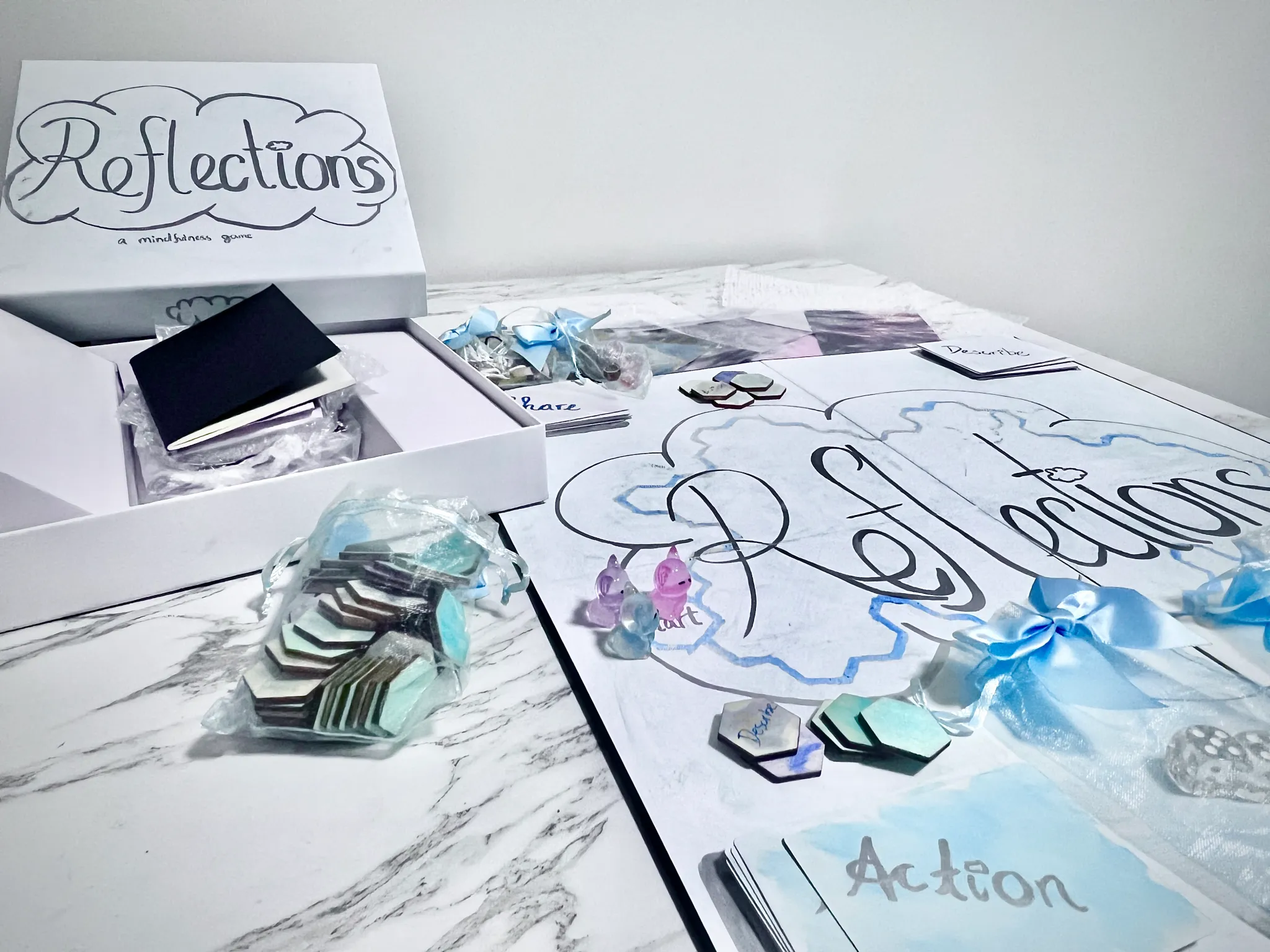
A cloud-themed board game with removable tiles to set new paths every game, adds a puzzle component during setup to get players into mindful/intentional mood. The card tiles: correspond to the “share”, “describe”, and “action” cards, to let players know when to take a car and complete prompt. The cards are the same idea as the cards from the third prototype: “share”, “describe”, and “action” cards with prompts for players to answer/complete. Additionally, I added steal tiles and win tile and corresponding rules for them.
Conclusion
This project was a good exercise for going through the design process. I was able to conceptualize and create many different prototypes using a variety of materials. I was able to see how products can evolve during the design process, based on user testing and feedback.